Optimizing Stage Layouts with Versatile Moving Head LED Stage Lights
In modern performance design, spatial economy defines the boundary between creative freedom and logistical nightmare. Designers constantly struggle against heavy truss structures, limited power grids, and tight load-in schedules. Choosing versatile moving head LED stage lights transforms this paradigm completely. By integrating multiple independent optical engines into a single cohesive chassis, rental companies can radically compress their setups. A single fixture now handles tasks that previously demanded an entire cluster of traditional beams. This shift redefines how production crews manage weight distribution and physical hanging space on complex stage roofs.
Streamlining Production Footprints via Multi-Beam Fixtures
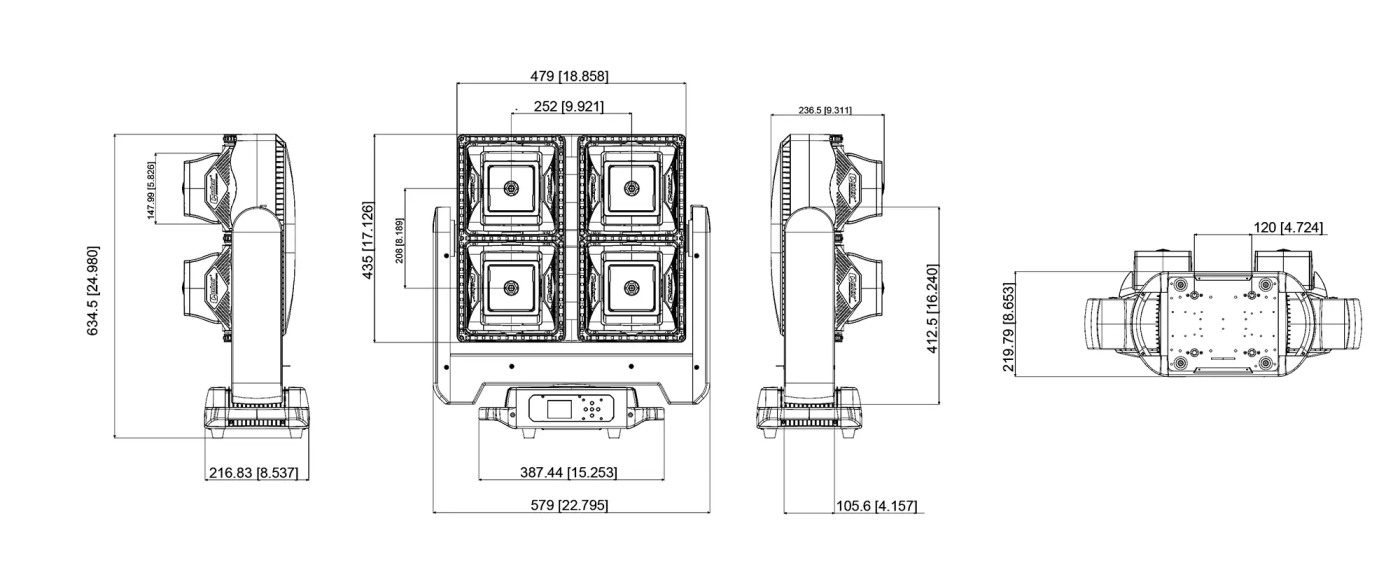
Spatial economy is an economic filter rather than a mere aesthetic choice. Consider a tight festival rig where every centimeter of truss is fiercely contested by different departments. The CRAZYCUBE 46 houses four individual mini moving heads within a single frame, actively solving this structural warfare. Instead of rigging four discrete beam fixtures, which requires four clamps, four safety cables, and four distinct power drops, a technician rigs just one. This consolidates structural weight, accelerating the tedious load-in process.
Logistics managers quickly realize that fewer flight cases mean smaller trucks, saving substantial transportation capital during grueling multi-city tours. It changes the basic arithmetic of rigging. The reduction in cabling also minimizes the risk of signal failure, creating a cleaner, safer workspace above the performers’ heads.
Executing Complex Choreography via Continuous PAN/TILT Rotation
When the beat drops at an electronic music festival, standard pan-and-tilt limits can shatter the visual momentum. Traditional fixtures must eventually hit a hard stop and reset, swinging backward and momentarily disrupting the audience’s immersion. With 360-degree continuous rotation on both pan and tilt axes, this kinetic limitation vanishes entirely.
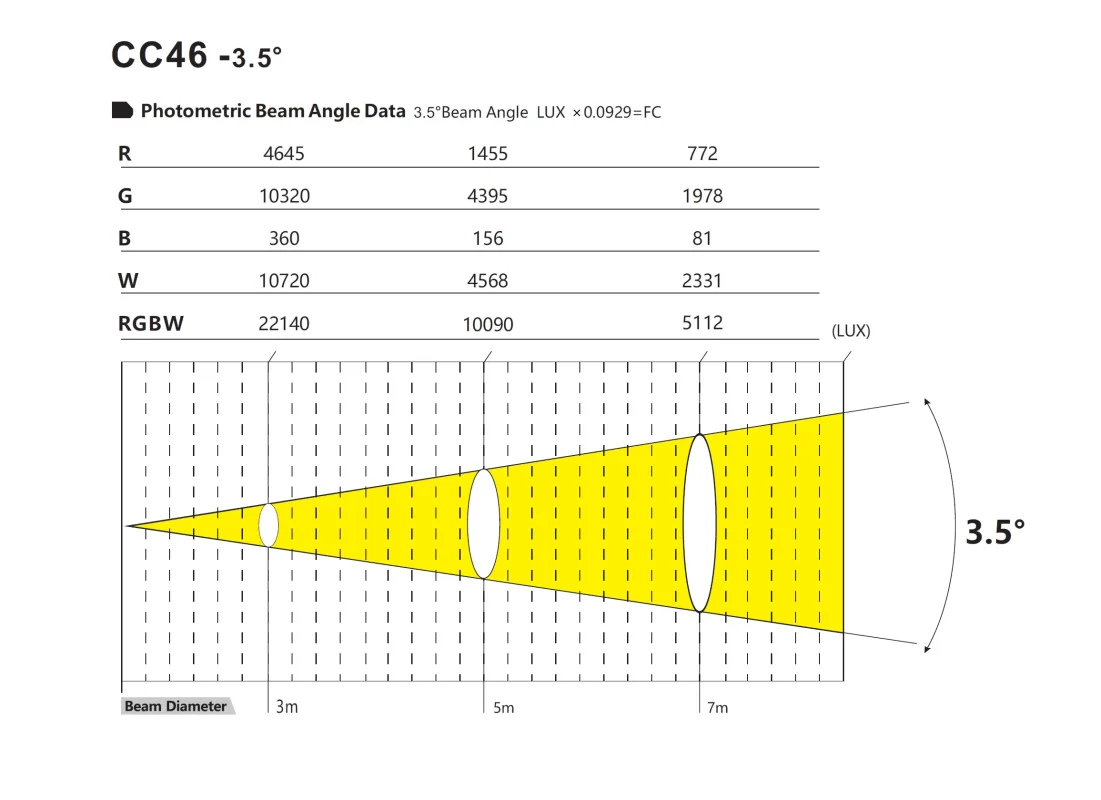
The fixture behaves like a controlled pendulum governed by precise mathematical laws, throwing sharp 3.5-degree beams into the darkness. Meanwhile, each mini head independently manipulates its own 76-degree field. This dual-layered geometry allows lighting directors to map complex, organic aerial patterns that resemble a living organism spinning on the truss. In high-energy environments like premium clubs or massive arenas, this perpetual motion maintains absolute psychological tension. Fast, quiet three-phase motors ensure these rapid shifts happen without acoustic interference, preserving the sonic purity of the performance.
Advanced Thermal Management and Longevity of 60W LED Sources
Beneath the flashing colors lies the harsh reality of thermal physics. Operating four high-power 60W RGBW LED chips simultaneously generates intense localized heat, the ultimate enemy of color consistency. If an optical engine overheats, the red diodes degrade faster than the blue ones, skewing the delicate white balance over time. To combat this, advanced self-adjusting fan cooling systems are deeply integrated with heavy aluminum heat sinks.
For permanent installations, such as high-end banquet halls or television studios, this precise thermal regulation is critical. It ensures that after thousands of hours of intense operation, a pastel lavender or a subtle warm candle-glow remains identical to day one. Color Imagination LED Lighting Limited engineered this precise architecture to safeguard long-term investments, drawing on extensive manufacturing experience to deliver consistent color decay control across the operational lifecycle of these specialized LED stage lights.
Meeting Rigorous Standards for Multi-Functional Venues
Multi-functional venues demand extreme hardware elasticity. A modern venue might host a whispered corporate presentation at noon, a televised broadcast at four, and a thumping rock show at midnight. The transition between these worlds requires more than raw power. It requires finesse.
With an adjustable LED frequency ranging from 900Hz to 2.5KHz, the fixture guarantees flicker-free operation under broadcast cameras, satisfying the strict demands of television producers. Its smooth 0-100% linear dimming curves allow slow, imperceptible fades during intimate wedding banquets where harsh jumps would ruin the mood. Then, when the venue shifts to a high-octane roadshow, the 1-25Hz variable strobe cuts through the heavy haze with violent precision. It bridges these divergent environments effortlessly, shifting roles at the command of a DMX console.
The modern entertainment landscape leaves no room for delicate, single-purpose hardware. Production companies require robust instruments that balance raw visual impact with pragmatic operational efficiency. Deploying intelligent moving head LED stage lights allows designers to bridge the gap between architectural constraints and pure creative ambition. It turns physical limitations into advantages. By choosing fixtures engineered for endurance, adaptability, and complex aerial choreography, operators ensure their rigs stay relevant across diverse venue profiles. The evolution of performance lighting favors those who consolidate their physical footprint while expanding their expressive potential on the stage.
Other News
-
Can this Beam+Spot+Wash Hybrid Moving Head run quietly in theaters?
-
Does this LED Effect Light work well in high humidity venues?
-
Is this Beam+Spot+Wash Hybrid Moving Head compliant with EU rules?