Optimizing Stage Lighting Workflows with Compact LED Spot Moving Heads
The physics of live performance is a game of space and weight. For us, building equipment for the modern stage means constantly balancing pure output against the physical realities of the venue. Large, heavy fixtures have their place, but the logistics of smaller live music venues, school auditoriums, and corporate ballrooms demand a different approach. Compact stage spot lights reshape what is possible in tight spaces.
This is where compact stage spot lights come into their own. They reshape what is possible in limited spaces, serving as flexible tools for designers who need to move fast without losing the punch of a professional profile fixture. The architecture of a venue often dictates the design, and a compact 150W LED engine offers a pathway to seamless integration without sacrificing the crisp edges and deep textures required by modern lighting design.
Overcoming Mechanical and Noise Constraints in Quiet Environments
Silence is an invisible asset in stage design. In a broadcast studio or an intimate theater environment, a noisy cooling fan or a grinding pan-and-tilt motor can destroy a performance just as easily as a blown fuse. The mechanical design of smaller fixtures often forces a compromise, as tiny fans must spin faster—and louder—to dissipate heat. Advanced stage spot lights solve this with intelligent thermal engineering.
To break this cycle, the modern approach relies on an efficient, low-noise, self-adjusting fan cooling system integrated directly with a heavy-duty aluminum chassis. The fan reacts dynamically to the internal temperature of the 150W LED engine, spinning only as fast as necessary to maintain thermal equilibrium. This leaves the ambient environment quiet during delicate acoustic sets or spoken-word performances.
Movement requires the same level of discretion. Utilizing precise two-phase motors, the pan (540°) and tilt (270°) functions achieve rapid positioning without the high-pitched whine common in older automated fixtures. These motors provide smooth 8-bit and 16-bit resolution, allowing slow, unnoticeable transitions or instant, dramatic cue changes. Professional stage spot lights must deliver this silent precision.
In active production environments, accidents happen. A dancer might bump a truss, or a piece of moving scenery might catch a fixture head. Instead of ruining the rest of the show with a misaligned beam, the fixture uses an automatic scan position memory system. If the head is forced out of its planned alignment, it silently and automatically repositions itself back to the exact DMX coordinates within milliseconds, saving the lighting cue without intervention from the console operator.
Streamlining Field Configuration via Advanced Interfaces and UI
Time on-site is expensive. When a crew is loading in a show, every minute spent programming, patching, or troubleshooting a fixture overhead translates to delayed soundchecks and rising labor costs. The interface on a moving head shouldn’t be an afterthought buried on the bottom panel. Well-designed stage spot lights prioritize accessible, intuitive controls.
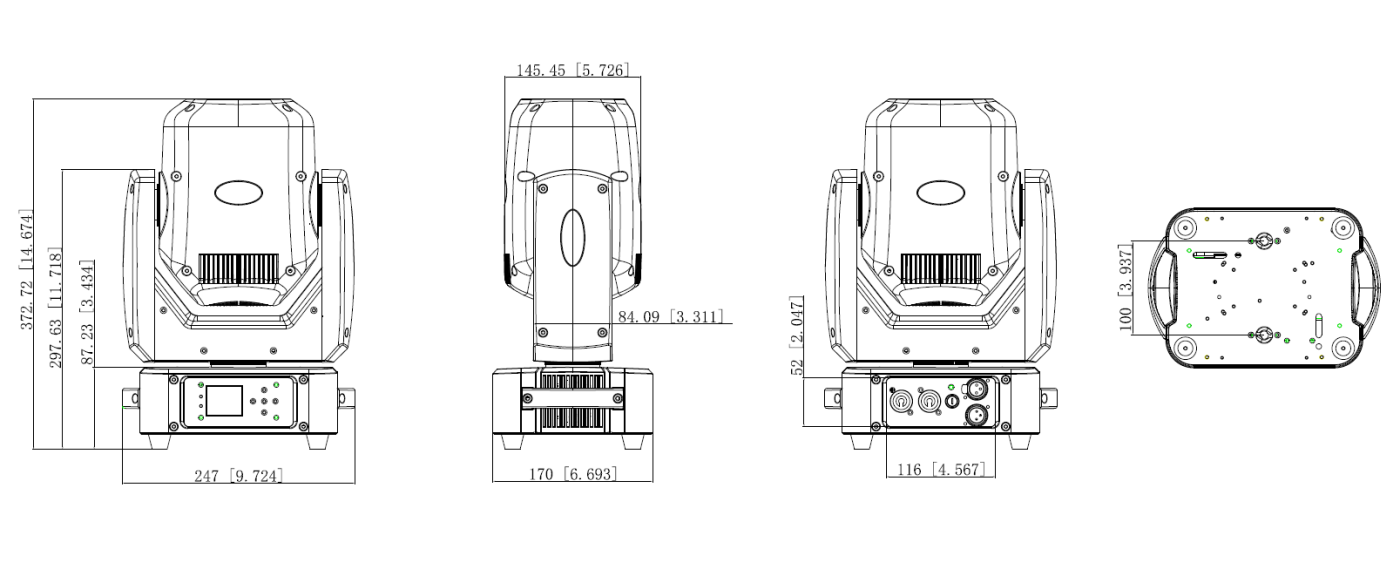
Consider the physical reality of rigging. When a fixture is hung upside down from a truss, reading a standard menu screen requires awkward neck strain or looking through a mirror. A simple but crucial design feature solves this: a 1.8-inch TFT LCD display that is 180° reversible. With a quick button press, the text flips, allowing technicians to patch address codes and change modes naturally, regardless of the fixture’s physical orientation.
| DMX Channels | 14 / 22 Channels (USITT DMX-512) |
| On-Board Control | 5 Control Buttons, TFT Display |
| Connectivity | 3-Pin XLR IN/OUT, RJ45 (Optional) |
| Control Protocols | DMX512, RDM, Art-Net (Optional) |
For smaller pop-up events, weddings, or architectural installations, bringing a full-sized lighting console is often impractical. The integration of an on-board DMX recorder and edit function allows users to record looks directly into the fixture’s internal memory. The unit can run these custom looks in a standalone master-slave configuration or auto operation mode, completely independent of external control data. Versatile stage spot lights adapt to any production scale.
When data lines are connected, troubleshooting is streamlined by a dedicated DMX signal monitoring indicator on the display panel. If a cable fails down the line, a technician can see instantly whether the fixture is actually receiving a clean signal, isolating data issues in seconds rather than tracing hundreds of feet of cable through the ceiling.
Ensuring Electrical Reliability under Varied Ambient Conditions
An automated light is only as reliable as the power running through it. Transient voltage spikes, voltage sags in older buildings, and extreme ambient temperatures at outdoor festivals are constant threats to delicate internal microprocessors and LED drivers. Robust stage spot lights are engineered to withstand these challenges.
To mitigate these risks, the internal power architecture must be resilient. Incorporating an electronic power supply with active Power Factor Correction (PFC) allows the fixture to operate smoothly across a wide voltage spectrum (AC100-240V, 50/60Hz). Active PFC ensures that the current drawn matches the voltage waveform, reducing electrical waste and protecting the fixture from the dirty power often generated by portable venue generators.
Thermal management acts as the second line of defense. The fixture features a constant temperature readout and management function, allowing technicians to check real-time core temperatures straight from the display menu. If ambient temperatures climb unexpectedly—up to the fixture’s maximum 45°C limit—the over-temperature protection management system kicks in, automatically scaling back power consumption slightly to protect the 50,000-hour lifespan of the white LED source rather than allowing the component to burn out mid-show.
| Total Power Consumption | 225W |
| Operational Ambient Temp | -25°C to 45°C |
| Protection Rating | IP20 |
| Rigging & Hardware | 2 * 1/4 Turn Omega Clamps |
| Net Weight | 8.2kg |
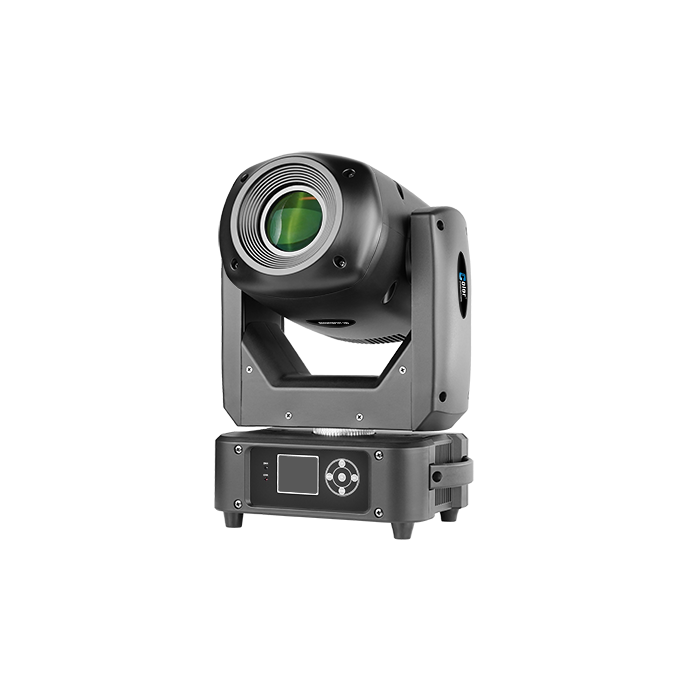
This structural durability is wrapped in a high-intensity, molded fireproof ABS PC housing, supported by an internal skeleton of aluminum and steel plates. Weighing just 8.2kg, it reduces the load-bearing stress on mobile truss structures while offering the rugged durability needed for the road. By combining dense optical performance with stable electrical engineering, these compact stage spot lights ensure that even the most demanding touring schedules can be executed with absolute consistency, venue after venue. From silent operation to intelligent power management, stage spot lights define modern portable lighting.
Other News
-

Optimizing Visual Impact: A Guide to Integrating Small Stage Lights
-
Designing Effective Worship Environments with Modern Stage Lights
-
Laser Technology in Outdoor Concert Stage Lights: Performance and Precision